

“Chastity” is the practice of locking your penis and testicles in a small “cage” device that prevents erections and (most) sexual pleasure. Typically you then give the key over to your partner (or “keyholder”), and you both have fun with the power dynamic of not being in control of your own sexual pleasure. There are female chastity devices as well, although those are generally not worn long-term, and their popularity is much more niche.
Finding quality data about the types of sex people have is tough. Even data about mainstream sex is somewhat unreliable because it mostly comes from surveys. Once you get into more niche sexual practices, their taboo nature combined with selection effects (who’s willing to share, who’s willing to be honest, who’s even reachable) makes it hard to know whether you’re getting truthful data from anything like a representative sample. For something like chastity, this has meant it’s been difficult to answer even basic questions about who practitioners are and what their sex lives look like.
Here at Artebu we have data on real people’s sex lives that doesn’t have the same problems surveys do. Artebu is an app for iPhone and Android that lets couples customize, plan, act out, and then track their BDSM dynamic together. If that sounds interesting to you, you can learn more about it and install it here! The app is anonymous, and any data entered into the app is used to help plan and improve our users’ sex lives further. Because of that, data within the app is less likely to have people lying to maintain discretion, and it doesn’t have the same selection effects toward only people who are unusually open about their sex lives. We will see different selection effects (people motivated to seek out and install a BDSM app might be kinkier and more tech-savvy than average), but we still think the data is interesting enough to publish with that caveat.
Still, as the maintainers of the app, we have a unique view into how chastity fans go about their sex lives. So with that introduction, here are 8 insights from the data we’ve seen since we launched the chastity facet in the app this year.
The older you are, the longer you get locked up
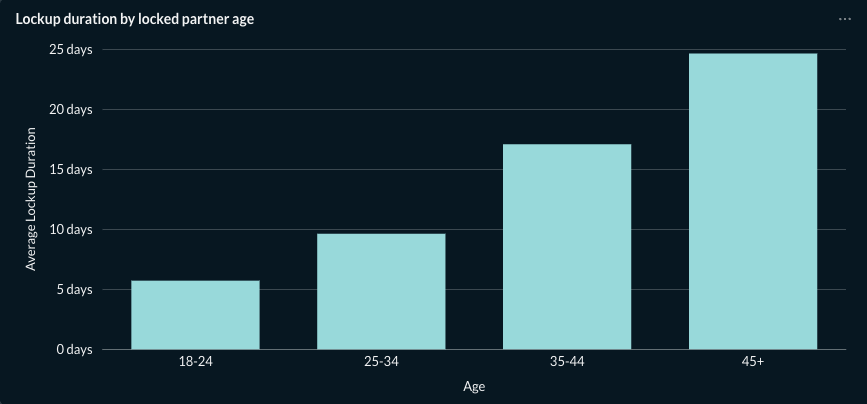
In our data, a “lockup” refers to the time between the cage going on and the cage coming off for an unimpeded orgasm. So breaks for hygiene, airport security, medical checkups, or anything else don’t reset the timer. This metric is specifically the time between when someone initially loses control of their own pleasure and the time they eventually experience an orgasm.
Because we verify birthdates (Artebu is an 18+ app), we also have user age, and we can see a very clear trend: the older you are, the longer your lockups last. This matches conventional wisdom about chastity, with older users anecdotally reporting longer lockups. It also matches the scientific consensus that men’s libidos tend to decline as they age—and since chastity is about controlling sex drive and letting anticipation build up, it makes sense that older men might need longer to get the same psychological payoff.
Having a keyholder means longer lockups
While Artebu is designed for sexual partners to collaborate together on their BDSM dynamic, it also works as a “single player” app where you can track chastity lockups done solo. When we look at the average duration of solo users’ lockups vs. those with keyholders, we see a significant difference.
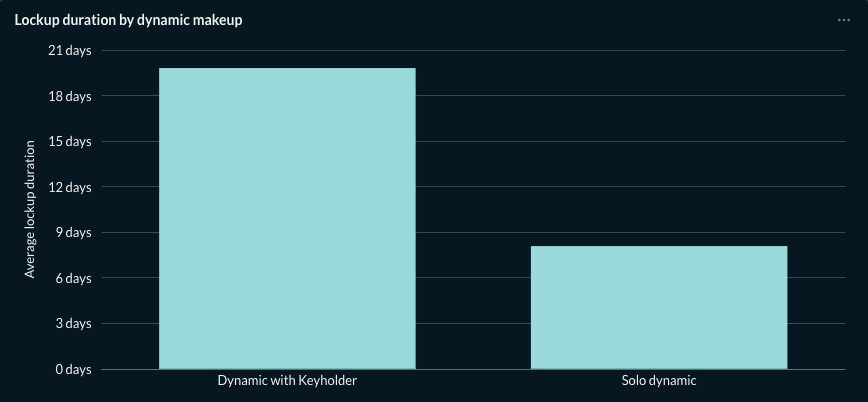
Those with keyholders spend longer locked up! This may seem obvious (“they don’t have to rely on their own self-control”), but we weren’t sure if it was guaranteed to be true in practice. If the majority of keyholders were simply going through the motions to go along with their partner’s fantasy, we might have seen these durations come out pretty similar—like the keyholder just caving the first time the locked partner suggests ending a lockup. Or we could even imagine the keyholder wanting sex more frequently and having that interfere with the desired “denial” aspect of the practice.
But nope: keyholders are doing their job and limiting their locked partners’ pleasure. The effect is actually pretty huge here too, with keyholders setting time between orgasms at about double that of solo chastity users. This feels like a strong indication that having a keyholder is “working as intended” on average.
Lockup duration agreements
Another feature of Artebu helps ensure couples are aligned on their limits, goals, and overall interests by letting them propose and approve “agreements” about BDSM activity. This is used in lots of different ways across the app, but for chastity specifically there’s a “maximum lockup time” agreement many couples use, which lets both partners agree up front that a lockup shouldn’t exceed a specific duration.
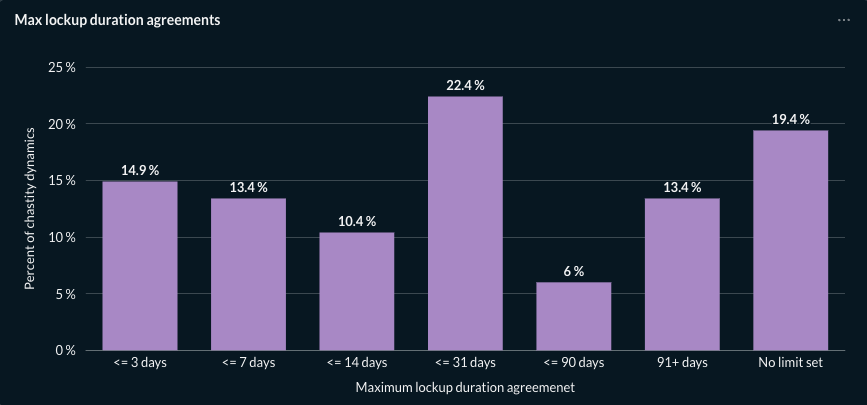
The distribution here varies pretty widely, but 14–31 days is the most common. One note: the “No limit set” option might sound like a hardcore choice of complete power exchange, but in practical terms setting up a max lockup duration agreement is not required to use Artebu’s chastity tracking. So for many couples it’s probably just an indicator they didn’t bother with the feature but they could still having a time-limit they’ve discussed outside of the app.
Overall percent of time spent locked varies widely, and pretty uniformly
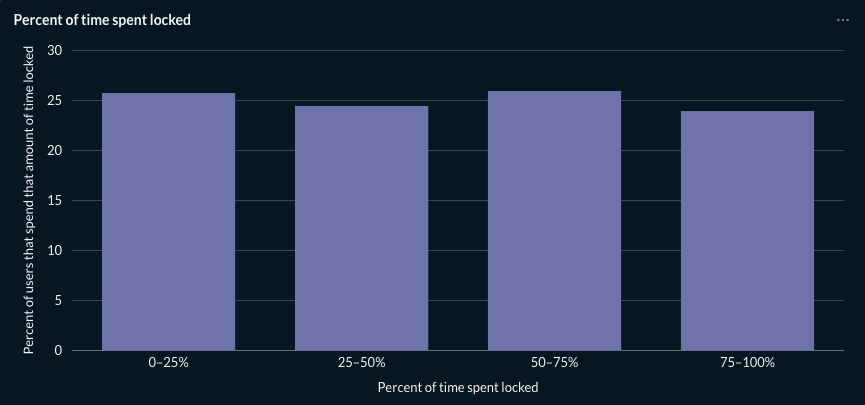
What percent of their days are people with chastity in their sex lives actually spending locked inside their devices? According to our data, it varies widely—from close to 100% to just occasionally.
This is probably skewed toward a higher “% of time locked” right now because of the types of users Artebu has. Couples trying chastity for the first time, or who do it once or twice a year for a week, are less likely to have discovered and installed Artebu. So we may be biased toward more “hardcore” chastity fans.
Still, an interesting data point is that across all four quartiles, the % of our users that lock up that amount of time is pretty similar. Our takeaway is that chastity can be flexible enough to work in lots of different real-world lifestyles.
Those getting locked up are usually more into chastity than the keyholders, but not always
We don’t directly ask users which partner is kinkier or more into a specific practice, but we do have one piece of data that we believe correlates. In order for a couple to start using Artebu, one partner needs to discover the app and install it first, and then invite the other partner. We believe browsing the internet for BDSM apps correlates strongly with being “into” BDSM practices like chastity, bondage, orgasm control, and the other tools Artebu provides. So while it’s not perfect, there’s strong reason to believe that the user who invited their partner is, on average, more into kinky stuff.
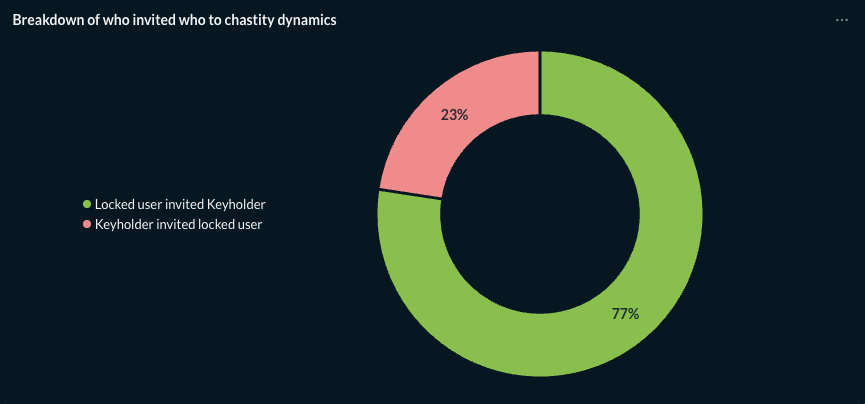
We can see that locked users are about three times as likely to have invited their keyholder as they are to have been invited by their keyholder. While it’s not surprising that keyholders are less likely to propose the app to their partners, 23% of users being invited by their keyholder is a little higher than we would have guessed.
The conventional wisdom in BDSM circles is that submissive men greatly those willing to dominate them, so this is refreshing evidence that there are dominant partners out there researching and downloading apps to use with their submissives.
If your keyholder is more into chastity, you may not be locked up as long
When we take that same “who invited whom” data and compare lockup durations, we see an interesting effect as well.
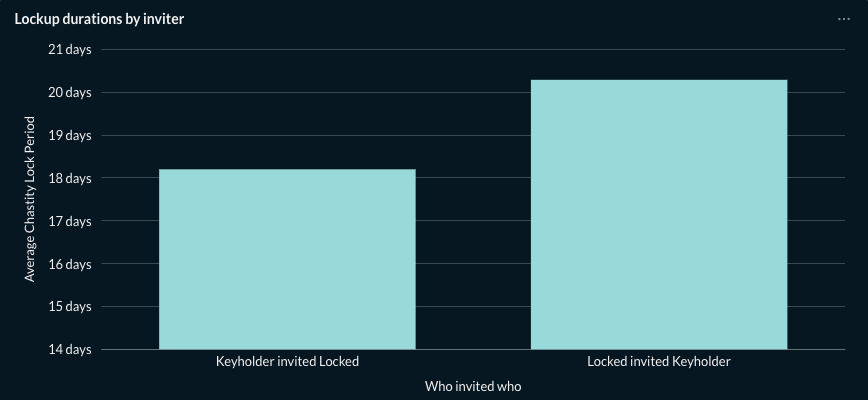
Keyholders who initiated the use of Artebu in their relationship actually lock up partners for slightly less time. There isn’t an immediately obvious reason for this. Maybe keyholders that are into it have higher sex drives overall, and so they unlock their partners for penetrative sex more often. Hard for us to say with the data we have.
The effect here isn’t huge, lockups are only around 10% shorter, so it’s hard to say this is definitive. But we still think it’s interesting, and it lends some credence to our theory that the person who invites their partner to the app differs in systematic ways.
Orders are carried out faster by locked submissives
With Artebu, dominant partners can give their submissive partners orders within the app. Couples interested in chastity (as well as other couples with different dynamics) use this in a variety of ways: remote BDSM scenes when partners are long-distance, ordering a submissive to “set up” for sex (“get dressed in ____ and get these toys out and ready for use: ____”), or even just ordering them to do chores around the house.
Since we know the exact times users are locked up, and we know when orders are given and when they’re completed, we can compare order completion time based on whether the submissive was locked up when receiving an order.
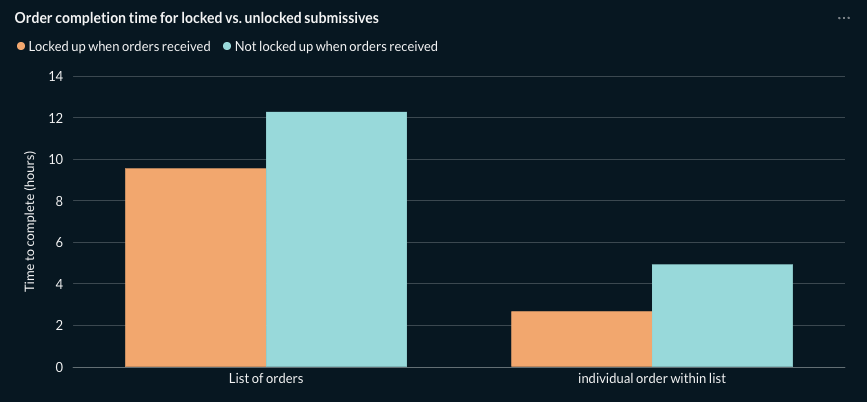
If your submissive is locked up, they’re much more likely to hop to it when receiving orders from a keyholder, compared to a typical BDSM submissive receiving orders from their dominant.
The above chart shows two durations. Orders in the Artebu app are sent as order lists—a sequential checklist of things to do. We can see that overall list completion time is about 25% faster for locked submissives. However, completion time on individual tasks within the list is almost 50% faster. So not only are locked users completing lists faster, they’re also receiving order lists with more tasks in them.
If you’re a potential keyholder and want to get some chores done around the house fast, this might be worth considering.
Chastity couples that share more kinky ideas do more kinky stuff
Artebu also has an “ideas” page that users can scroll through to brainstorm their next scenes. Inside the app there’s a button to share an idea with your partner. We can see that, especially among chastity couples, partners that share kinky ideas with each other end up doing more kinky activity.
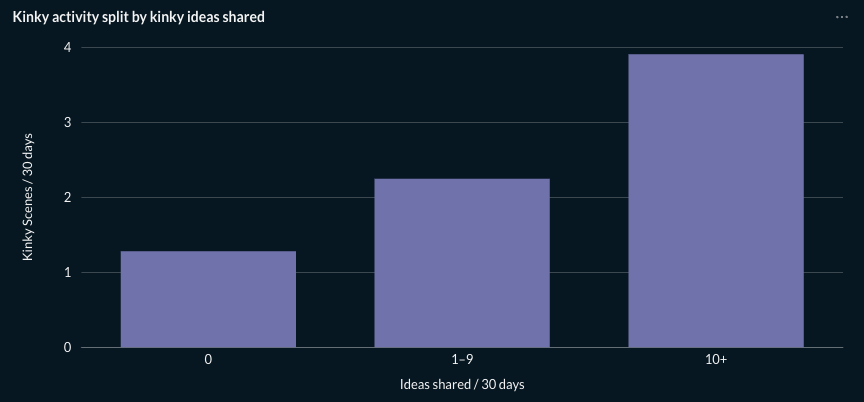
The y-axis is an internal metric I’m not going to fully explain here, but the best way to think about it is the number of “full BDSM scenes” in a 30-day period, where fractional scenes (something lower effort) can still count. Partners that share any ideas end up having more kinky sex, and for those lucky few that share 10 or more ideas in a month, they’re getting up to stuff almost once a week.
While we’d love to claim Artebu ideas are the root cause of this, it’s probably correlation rather than causation. Still, if you’re looking to have kinky sex more often, getting on Artebu and sharing ideas with each other there probably won’t hurt.
Conclusion
For existing chastity fans, hopefully these stats gave you some insight into how the broader fanbase does chastity in the real world. For those looking to try chastity for the first time, hopefully this gives you the courage to be a bit vulnerable and propose it with your partner—after all, lots of others are doing it in all sorts of ways these days. And for those of you just reading along because it’s fun to think about all the crazy sex people have, hopefully this inspires you to try something more “out there” in your own sex life, even if it’s not chastity.
And for all readers: please check out the Artebu app or consider sharing the app or this blog post to those interested in chastity or BDSM in general. We’re still early on in this project, and any additional attention we can get from the BDSM community really helps.